Nigerian Traders Are Losing Ground in Their Own Market. Nobody Has Measured What It Is Costing Us
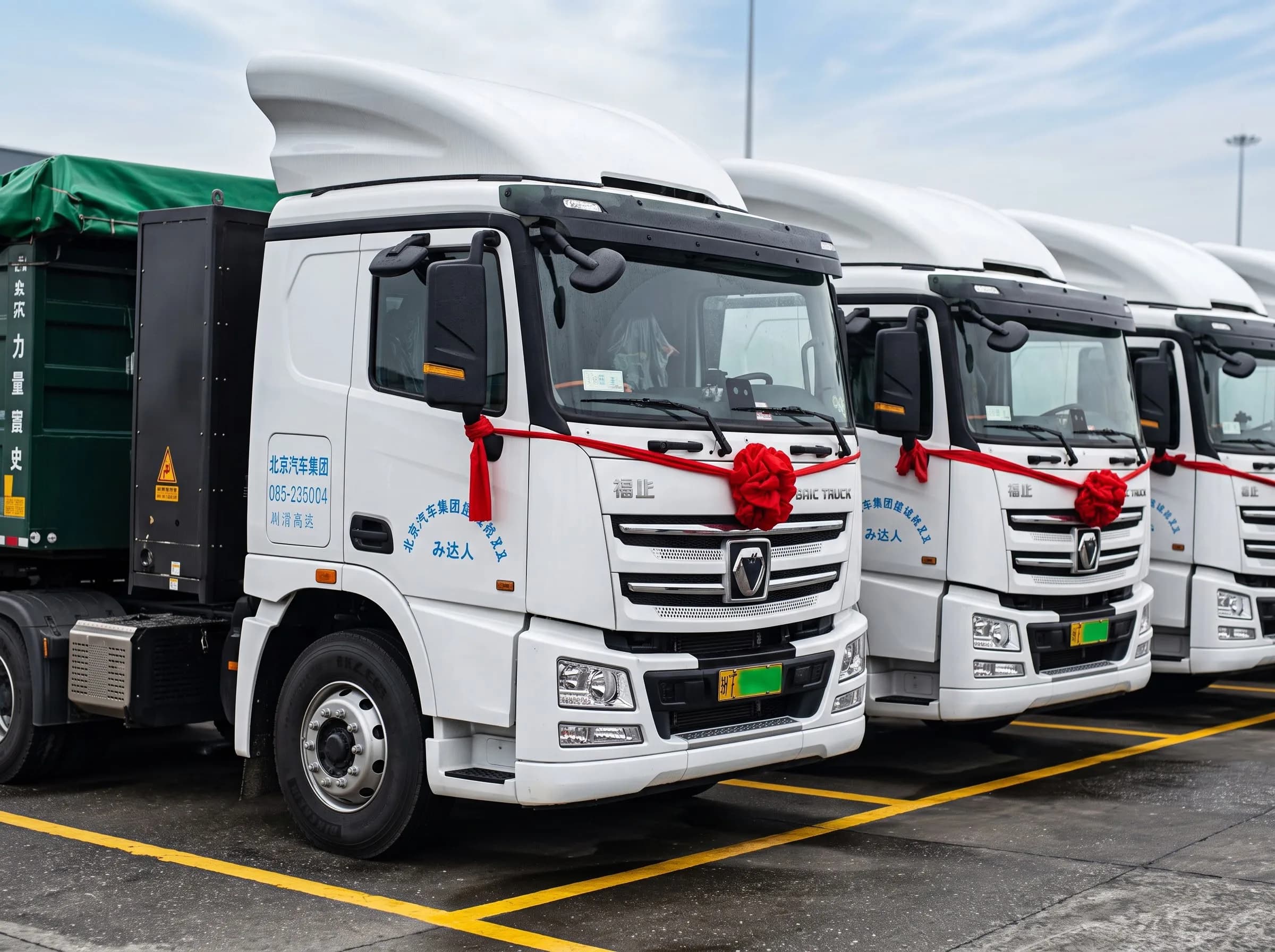
A Lagos dealer in new trucks who has spent years in the business told NTMR his operation is under serious strain, and that foreign nationals have taken over the trade he built. NTMR takes a more nuanced view, and is of the opinion that the strain is more likely due to the advantages foreigners come with, both technical and financial. The same dealer does not regard the problem as confined to his sector. In his account, the same displacement is working its way through trading sectors across Nigeria.
What the law permits, and what nobody has checked
Nigeria's framework is open by design. Section 17 of the Nigerian Investment Promotion Commission Act provides that a non-Nigerian may invest and participate in the operation of any enterprise in Nigeria, subject to the Act and its negative list, which covers arms, ammunition, narcotics and military equipment. Vehicle distribution is not on that list. A foreign-owned business is expected to incorporate with the Corporate Affairs Commission, register with the NIPC, meet the applicable capital requirement and obtain a Business Permit from the Ministry of Interior. Those conditions met, it trades as of right.
What actually changed in the truck trade
The sector our source works in shows the mechanism more clearly than most.
For years the Nigerian dealer's business was intermediation. He identified the supplier abroad, carried the import risk, financed the stock, held it, and sold it on. His margin was payment for solving a problem the manufacturer could not solve from China.
Chinese manufacturers then solved it themselves. Sinotruk, whose HOWO brand is the most widely sold Chinese heavy truck line in Nigeria and across sub-Saharan Africa, runs a joint venture assembly facility in Lagos with full CKD production capacity, part of a network of assembly plants the group has established in a dozen countries. Where the manufacturer assembles locally, sells directly and services what it sells, the independent Nigerian distributor is not so much undercut on price as removed from the transaction. The gap he stood in has closed.
This is what vertical integration does to a distribution layer, and it is not peculiar to Chinese firms. But it is Nigerians who are absorbing the effect, and our source's contention is that the pattern is not confined to trucks.
Three questions Nigeria has not put
How far has it gone? There is no published measure of how many Nigerian traders and distributors have been displaced by foreign-owned operations, in which sectors, or at what rate. Trader associations raise it periodically. It has never been counted.
What is the net effect? The accounting has entries on both sides. Locally assembled trucks at competitive prices lower haulage costs, and haulage costs pass through to the price of everything moved from Nigerian ports to Nigerian markets. Assembly plants employ Nigerians. Against that sit the businesses under strain, the trading expertise being lost, and margins that leave the country rather than recirculating in it. Which side is heavier is an empirical question. Nigeria has not done the arithmetic.
Where does the value settle? An operation that assembles in Nigeria, employs Nigerians and pays Nigerian taxes is a different proposition from one that imports finished units and repatriates the margin. Both may be perfectly lawful. They are not equivalent for the economy, and policy currently treats them as though they were.
Not a call for closure
Kenya has taken a harder route. On 2 September, President William Ruto directed enforcement against foreign nationals in hawking and small retail from 7 September, saying such trade should be left to Kenyans. The directive is contested at home. The bill before Parliament has not been enacted and does not authorise the closures announced, and the government has not identified the legal power the action rests on.
NTMR is not calling for Nigeria to follow. Nigerian traders operate across Africa and are exposed to precisely that treatment — as they were in Accra in April, when Nigerian onion wholesalers were accused of bypassing local market roles and Nigerian producers suspended exports to Ghana in response. A country that expels traders should expect its own to be expelled.
What we are calling for is that the question be taken seriously. Nigeria has spent years asking how to attract foreign investment. It has not asked what that investment displaces, whether the displacement is happening within the rules or outside them, or whether a framework built to bring in capital and plant is the right instrument for a market in which the capital arrives and the Nigerian trader disappears. The real deal may be the encouragement of local manufacturing of some of the parts, and a separation between manufacturing, assembly and direct trading.
NTMR invites responses from trader associations, distributors, regulators and affected businesses. Write to editor@nt-mr.com.